
A Collaborative Approach to Charitable Foundations
By Sara Bongiorni Alexander | Photos by Darlene Aguillard
Expanded back-office operations don’t usually come with a back story of hurricanes, human endurance, and transformational rebuilding to protect people and places against future storms.
Yet the intersection of those forces shaped the Foundation’s expansion of services such as accounting, legal guidance, investment management and board governance in support of a network of corporate, family and community foundations across Louisiana.
The Giving Collective network comprises 13—soon 14—supporting organizations, each governed by their own board of directors and mission. Network members choose the backoffice services they want on an a la carte basis depending on their needs. Reducing costs through economies of scale and freeing members to focus on philanthropic efforts are key goals, but there is a larger idea at work, too.
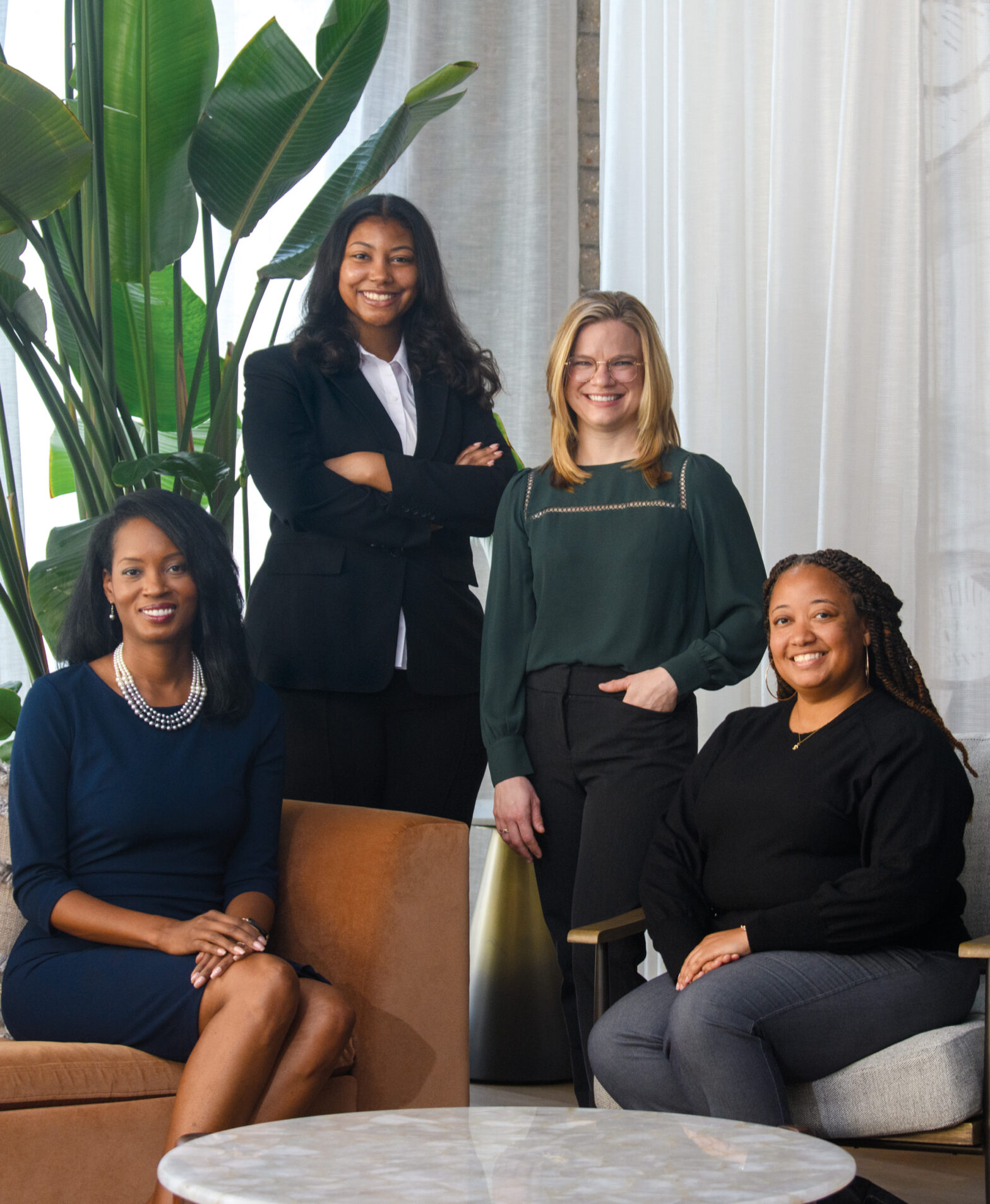
Pictured right: BRAF’s Enterprise Strategy management team: Shermaine Haymer, Patience Butler-Gasper, Lauren Crapanzano Jumonville, and Devon DeShields
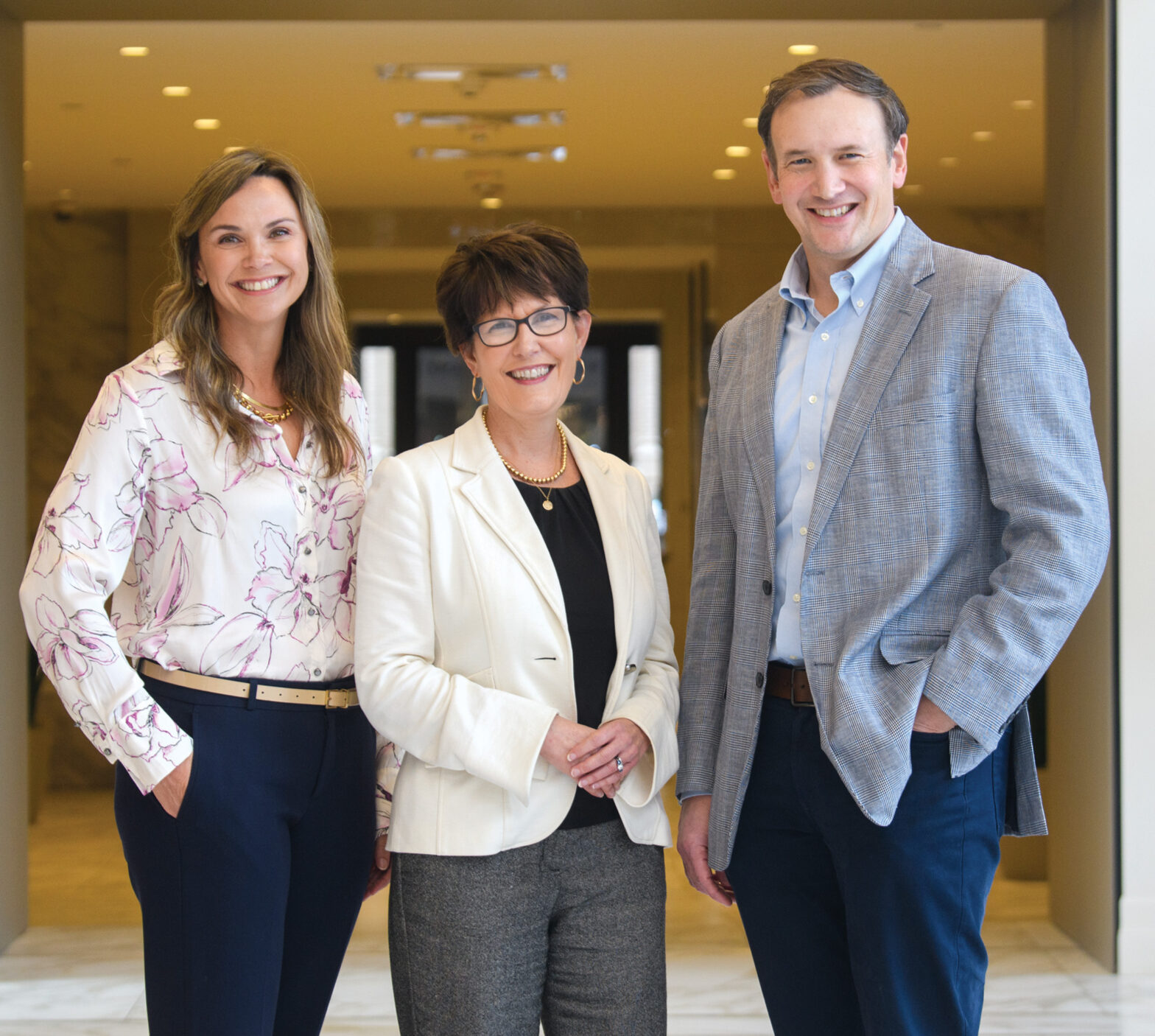
“We are better together,” said Lauren Crapanzano Jumonville, the Foundation’s senior vice president of Enterprise Strategy, who oversees the team that provides and coordinates shared services to network members. “We want to help foundations have maximum impact in their communities.”
Offering services through a unified network became part of the Foundation’s business model during strategic planning nearly four years ago. It provides a single point of entry for services that also includes shared technology, grant tracking and payment processing.
A history of collaboration on disaster response lay the groundwork for the back-office expansion. In fact, disaster response has long been a unifying focus of the Foundation’s relationship to The Giving Collective’s two community foundation members.
The Community Foundation of Southwest Louisiana has been a Foundation partner since 2008, when it began its relationship with BRAF as a supporting organization. It looks to BRAF for accounting, legal guidance and investment of donor funds.
President and CEO Sara Judson describes the back-office network as a “big deal” for her organization and one that fits with the Foundation’s commitment to collaboration.
“We’ve had opportunities for investment with the Foundation that otherwise we would not have had,” Judson says.
Its ties to BRAF took on new significance when Hurricane Laura slammed into the Louisiana coast on August 27, 2020. The Foundation’s deep experience in disaster response—including after hurricanes Rita and Katrina and the 2016 floods—positioned the Lake Charles-based foundation to respond quickly to short- and longer-term recovery needs, explains Judson.
“Because of our being a supporting organization, we had access to that expertise,” Judson says.
The partnership helped the foundation move fast before and after the storm. The day before Laura hit, a relief and recovery fund was already up and ready to accept donations, Judson notes. CFSWLA worked with the Foundation’s communication team to identify potential donors and craft and communicate an effective message for maximum response.
Judson and her staff of three—counting Judson herself—worked out of BRAF’s Baton Rouge offices for five weeks after Laura tore up communication infrastructure.
“Their team became our team,” Judson says.
Fast action and collaboration paid off: Storm-recovery donations began coming in while Laura still churned in the Gulf. All told, the Foundation’s relief and recovery fund raised more than $7 million from all 50 states and 10 foreign countries. It made its first storm-relief grants of $250,000 each to the Red Cross, the Salvation Army and Catholic Charities about a week after the storm.
“Those are dollars we would not have had without BRAF,” Judson says.
Disaster-response collaboration is still more fundamental to the Northshore Foundation’s ties to BRAF: The Foundation used some Katrina donations to establish the Northshore Foundation in 2007 after an influx of residents from storm-ravaged New Orleans created new needs on the north side of Lake Pontchartrain.
Katrina donations also paid for an earlier feasibility study that showed Northshore residents wanted a community foundation and provided seed money to help the new foundation support Northshore not-for-profits with track records of effective local impact.

“So BRAF seeded the opening of our organization with the intention of us being able to go out and make grants to those still recovering from Katrina,” said Leslie Landry, president and CEO of the Northshore Foundation, which has looked to BRAF for back-office services like accounting and legal support since day one.
All three community foundations also meet at least twice yearly to share insights and information about potential and ongoing civic-leadership initiatives in their communities.
Judson and Landry say back-office collaboration builds on the access to experience, support and resources that make the network valuable to supporting organizations—and that are especially critical when disaster strikes.
“You know you are not alone,” Landry says. “The biggest thing for us is having deep relationships that allow us to better respond to our partners.”
After Laura, for instance, Landry’s team headed to Baton Rouge to help Judson’s team of three, which included an employee who had been on the job for mere weeks. Landry and her staff made calls, took calls and jumped in however they were needed to help raise funds in the weeks after the storm.
“It is a small foundation, and we helped with the capacity to respond to offers for help as calls were coming in so fast,” Landry says.
By accident of geography, Baton Rouge’s location adds to the value of the arrangement.
“BRAF is a great convener for all of us,” Landry adds. “It’s all of us helping each other.”
Recovery expert Paul Rainwater worked closely with BRAF and regional leaders as executive director of the Louisiana Recovery Authority in the years after Rita and Katrina. BRAF’s work included creation of the LRA Support Foundation to raise private funds for research and planning related to the unprecedented rebuilding effort.
Rainwater points out that there was no ready blueprint for LRA and other elements of the recovery work. The closest model was the Lower Manhattan Development Corp. that guided New York City’s recovery after the Sept. 11 terrorist attacks.
Funds raised through the support foundation paid for work by world-class planners to inform the years-long recovery work, work that continues to shape discussions about storm mitigation and response today.
“We were doing things that hadn’t really been done before here,” Rainwater says.
He sees a common thread running through BRAF’s collaborative approach to back-office operations and disaster response: The Foundation is good at identifying a role for itself that removes obstacles for partner organizations. He points to its role in collaborative projects as varied and complex as development of The Water Campus and creation of a regional automotive mechanic-training initiative.
“It understands where it fits and what role in can play, but it doesn’t push,” Rainwater says. “It identifies and responds to needs to provide extra bandwidth. It’s a great model.”
As elsewhere, the need for effective collaboration—and the role of foundations in those efforts—will likely grow in south Louisiana as elsewhere as cash-strapped local governments look to public-private partnerships to take the lead on facilities and initiatives they might have spearheaded in the past, Rainwater notes.
If disaster response is the back story for the Foundation’s back-office expansion, it’s an unfinished one. A telling real-time example: BRAF’s track record in urban redevelopment and storm rebuilding helped the Community Foundation of Southwest Louisiana secure a $2.5 million donation from Lake Charles native and Yahoo! co-founder David Filo and his wife, Angela, for a master plan for the city after Hurricane Laura.
The resulting 50-year resilience master plan helped the city win a $40-million HUD grant for a 562- unit mixed-income neighborhood in downtown Lake Charles.
Construction of the first affordable-housing element of the plan, Just Imagine SWLA, began late last year. It won the Congress for the New Urbanism Charter Award in May 2024.
Those accomplishments would not have happened without access to BRAF’s deep experience in disaster recovery and master planning, J udson says.
“Because of our partnership we could really leverage this grant from the Filos,” Judson says. “Amazing things that will change Lake Charles for the better forever have happened because of our connection to BRAF.
THE YEAR AHEAD
COMMUNITY FOUNDATION LEADERS SHARE THEIR PERSPECTIVES ON THE TRENDS IN PHILANTHROPY IN 2026

SARA JUDSON PRESIDENT AND CEO COMMUNITY FOUNDATION OF SOUTHWEST LOUISIANA
Our Community Foundation’s tagline is connecting people who care with causes that matter. And that is just what we do with people, families, companies, local governments and nonprofits.
We’re seeing that individual and corporate donors and volunteers don’t just want to give; they want to see the difference they’re making. They want their time, energy, and resources to truly matter. When people pool their strengths, big things start to happen from advancing coastal protection projects, to reimagining our lakefront and downtown, to expanding affordable and resilient housing.
Whether it’s utilizing a Donor Advised Fund, Qualified Charitable Distributions to support a specific nonprofit, or creating a legacy that allows the future Community Foundation SWLA to help the region thrive.
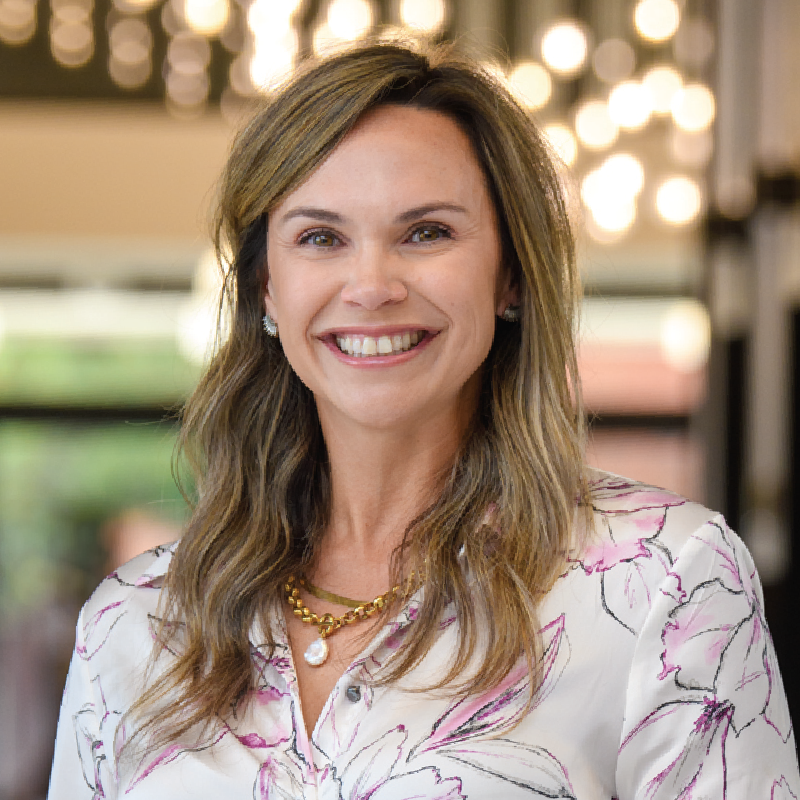
LESLIE LANDRY PRESIDENT AND CEO NORTHSHORE COMMUNITY FOUNDATION
Philanthropy is increasingly collective; donors, nonprofits, businesses, and public partners are looking to community foundations to connect the dots. Our role is evolving from being primarily grant makers to becoming strategic leaders in community problem-solving. In 2026, we must continue to focus on informed decision-making, transparency, and collaboration across sectors. We are known for stewarding resources wisely, but also the communities go-to nonprofit expert in the region—identifying opportunities and driving initiatives that strengthen our communities.
Community foundations must remain nimble, adaptive, and forward-thinking. In this landscape, our greatest value lies in our deep local knowledge, our long-term perspective, and our commitment to building stronger communities not just for today, but for generations to come.
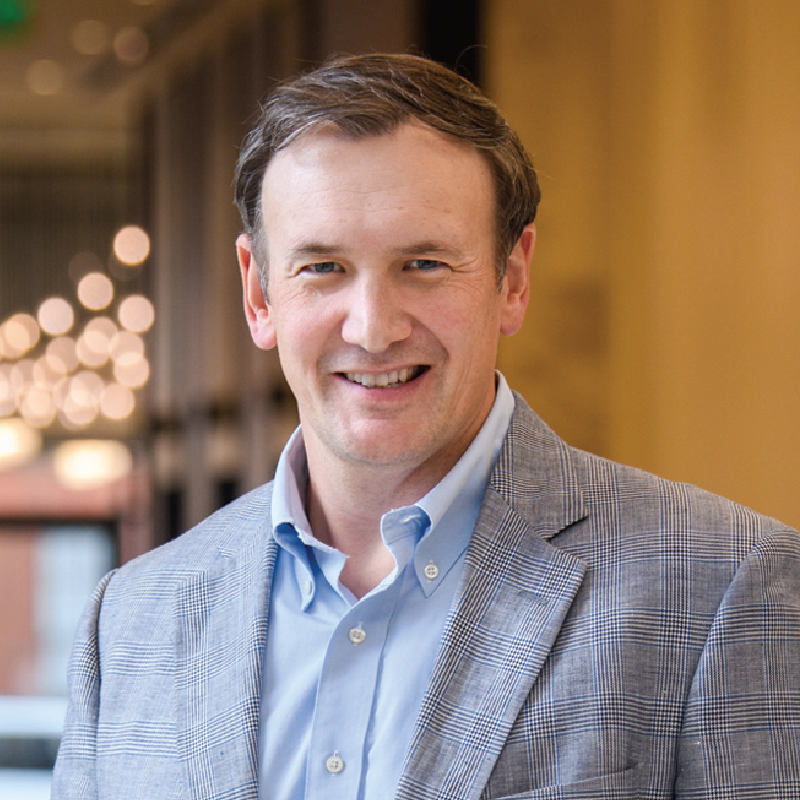
CHRIS MEYER PRESIDENT AND CEO BATON ROUGE AREA FOUNDATION
Across the country and here in Baton Rouge, giving is changing. Donors are looking for clear results, better coordination, and new ways to create lasting impact beyond traditional grants. In response, Community Foundations are stepping into a bigger role by bringing people together, sharing reliable information, and helping move resources where they can do the most good.
In 2026, BRAF will continue to connect public and private partners, strengthen local nonprofits, and listen closely to our community as we invest with care and purpose. By being proactive and strategic, we can help philanthropic dollars go further—supporting affordable housing, small businesses, and trusted community institutions today, while preserving resources so they can continue serving our region well into the future.