THE YMCA’S MODERN TRANSFORMATION
By Amy Alexander | Photos by Collin Richie
Tammy Abshire learned how to swim one sultry New Orleans summer when she was a kid.
There was that uncanny mix of excitement and fear over the din of music, splashing, and the perpetual, peppy voices of swim instructors and lifeguards unleashing their can-do attitudes on the next generation of soon-to-be confident Australian crawlers.
“I don’t recall a lot of childhood memories,” says the senior vice president of philanthropic impact at BRAF. “But that I remember–and it was at the Y.”
Now, Abshire helps nonprofits increase cash flow through Organization Funds at the Foundation. The Capital Area YMCA harnessed its Organization Fund to stretch its resources for the build-out of a brand new, 30,000 square foot A.C. Lewis branch in mid-city. As a result of the build, local water babies will learn to paddle in a facility created to strengthen both families and the city’s quality of life.
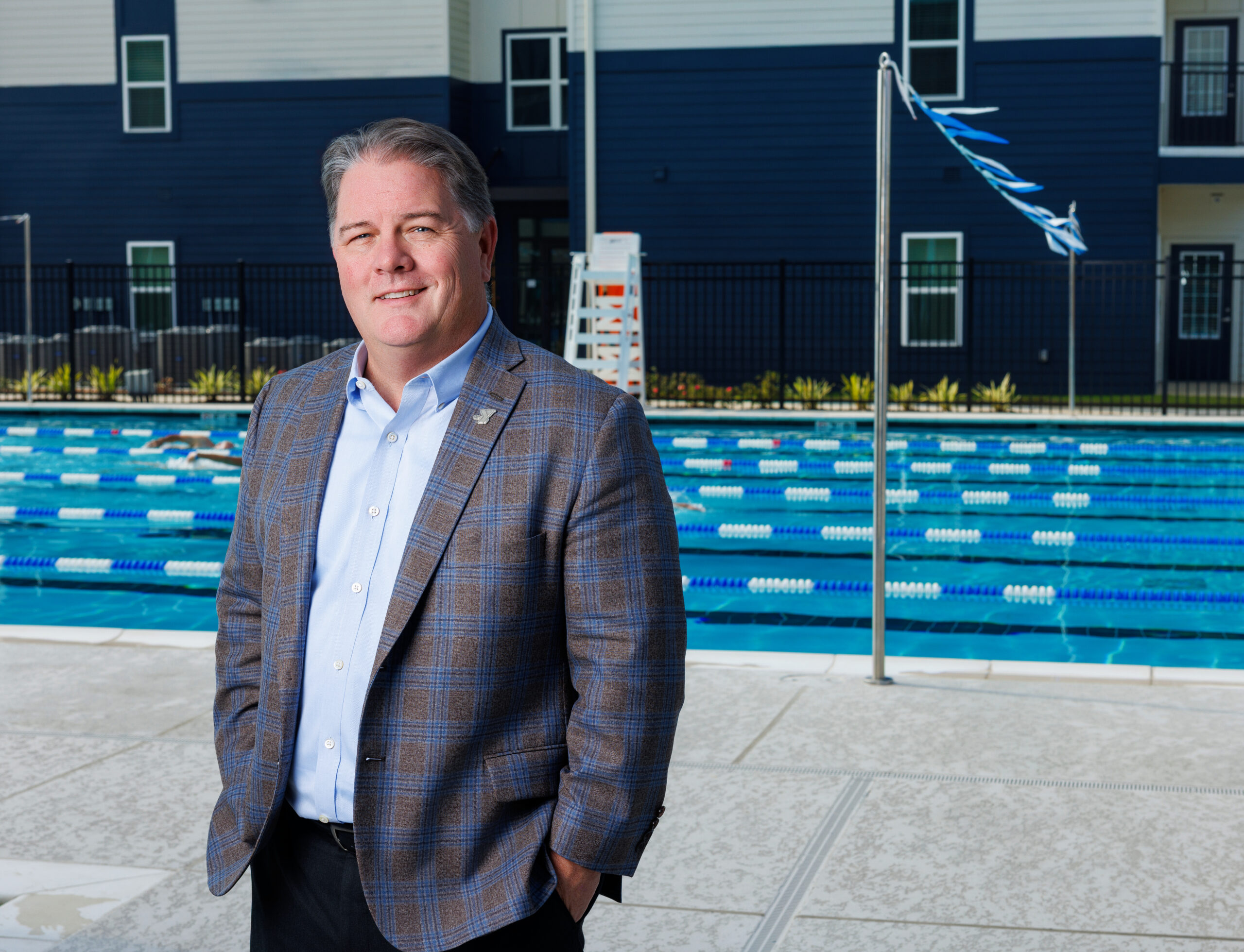
“It’s been amazing to see the transformation,” says Amy Province, who serves as the Y’s Board Chair. Walk into the sparkling new branch and you’re likely to see a school of new swimmers clutching the pool’s edge as sunlight gleams on the water, figuring out how to flex their muscles, hold their breath, and bend their limbs in a synchronized effort that harnesses buoyancy and bubbles.
Building out the new space was also a coordinated civic exercise calling upon leadership, vision, and strong financial stewardship. The project inspired collaboration among the Y, Bearing Point Properties, Womack Builders, Coleman Partners Architects, and BRAF.
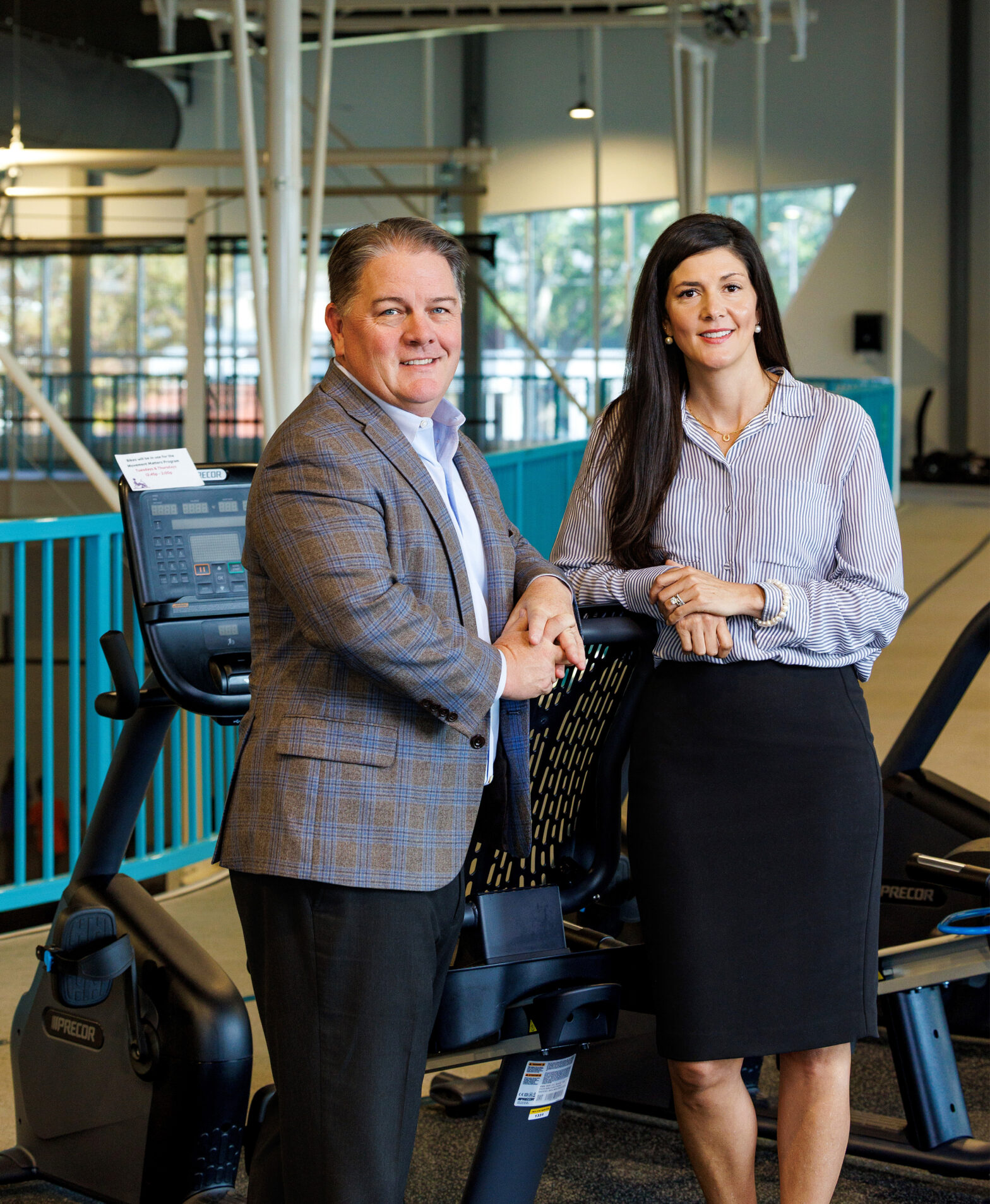
Pictured right: Sean Elliott and Amy Province in the gym at the new facility.
“When the partnership opportunity was first presented to the Y board, you could feel the energy in the room elevating with big dreams,” Province says. “The discussion felt less like a meeting and more like the start of something transformative.”
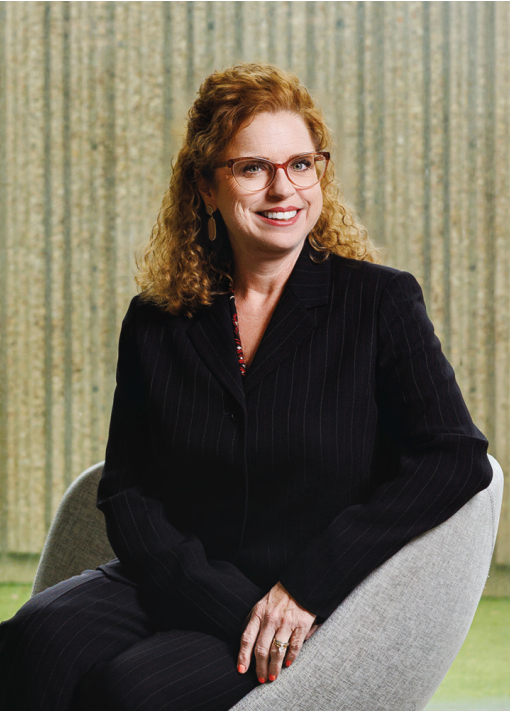
Abshire describes her role as one focused on fiscal scaffolding— supporting nonprofits not only as they grow programs but also as they strengthen the financial foundation that allows those programs to last.
“My role with the organization is helping with capacity building and helping them invest in their financial sustainability,” she explains. “A nonprofit can co-invest with BRAF to access our investment portfolio with Goldman Sachs, and it allows them to really look at different strategies to
support long-term sustainability.”
These Organization Funds are uniquely flexible tools. Nonprofits can structure them as endowments, where contributions are invested for lasting growth, or as spenddown investment vehicles designed to support nearer horizon projects.
“Some nonprofits create an endowment where funds are invested in a long-term strategy,” Abshire says. “And some invest in short-term funds. They’re able to withdraw from the invested earnings, depending on what their organization needs.”
Organizations establish these funds for a variety of reasons—sometimes to secure future program stability, sometimes as part of a capital campaign, and sometimes because donors contribute major gifts that exceed the nonprofit’s immediate operating capacity. “A donor may give them a significant gift that they have not budgeted for,” Abshire says. “This allows them to continue the mission of the organization while stewarding that gift wisely.”
The YMCA of the Capital Area was one of the earliest partners in this work. The Y established its organization fund at BRAF in 1997 as part of its long-term mission to promote healthy, supportive communities throughout the region. For decades the fund has helped the Y grow its reach—from youth development and after-school programs to wellness initiatives, water safety and family-centered support.
The A.C. Lewis branch stands as a testament to that sustained vision, reflecting the evolving ways the Y defines and fulfills its purpose in Baton Rouge. Province can still recall those early talks that led to the collaboration among Y’s stakeholders and partners.
“Around the table, board members spoke with both nostalgia and excitement. It was a chance to reimagine the Y as a modern, welcoming space that evolves with our community and continues the Y’s mission to strengthen community for all.”
For decades, the Y’s facility on Foster Drive has been a gathering spot for Baton Rouge residents in search of water, community, games, and exercise. One of the first YMCA branches in Baton Rouge, it was both beloved and beginning to show signs of wear and tear as the years flew by.
“The old building was full of memories, but the upkeep had become costly, and it simply couldn’t meet the community’s needs anymore,” says Province. “Seeing it transform into a bright, open, and modern facility feels like the heart of the Y has been renewed.”
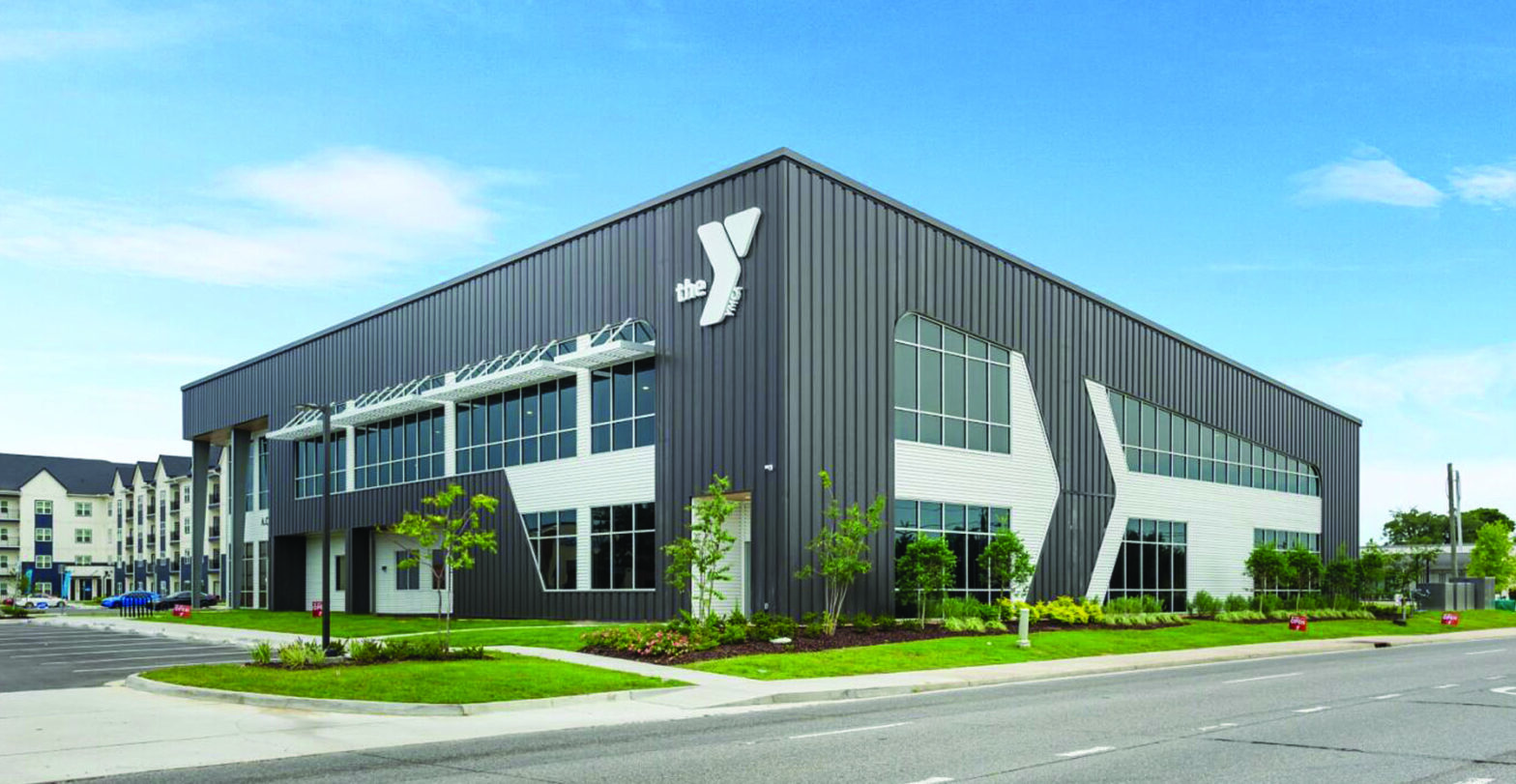
The new spot on Foster gleams. There are two outdoor pools, a full gym, classrooms, childcare facilities, a teen room, and, steps away, a fourstory apartment complex where teachers, police officers, and young families grow their livelihoods through affordable housing that invites civic
engagement at the Y.
Coleman Partners, the architectural firm that designed the new facility, has ample experience in building spaces that facilitate the experience of those who gather there. A recognizable array of churches, schools, offices, hotels, and residential developments bear the firm’s name.
.
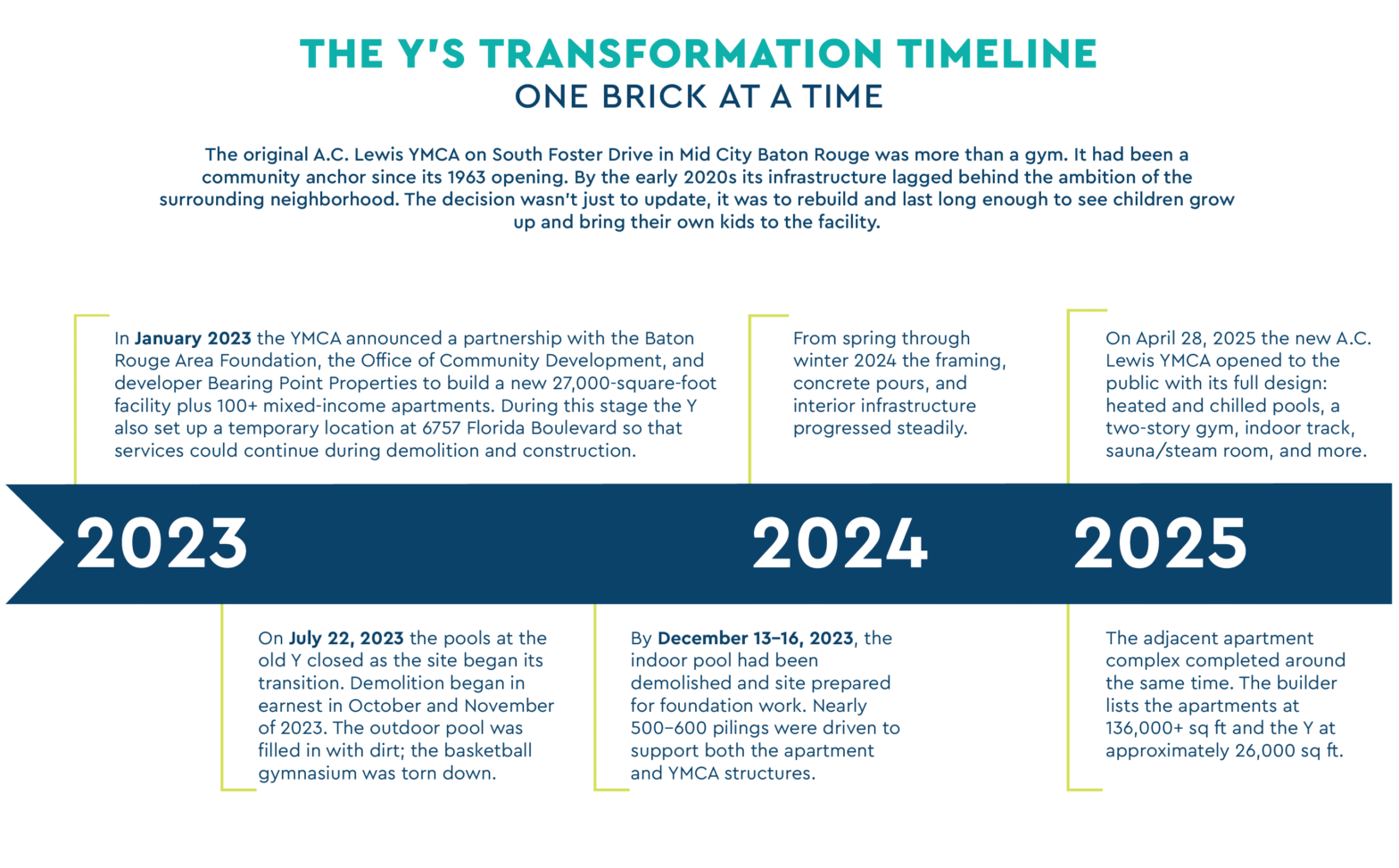
The new Y stands as a bold claim made from brick, water, and great ideas: Wellness, housing, and hope for the future belong in the same space.
“Baton Rouge is certainly a community where the YMCA is valued,” says Sean Elliott, who took over as CEO of the YMCA of the Capital Area in May when former CEO Christian Engle became CEO of YMCA of the Suncoast.
Elliot learned how to swim at the YMCA in Philadelphia. He was a strong swimmer, joined the swim team and eventually worked as a lifeguard and swim coach at the Y.
“My brothers and sisters all went to the Y,” he recalls. “That’s where we hung out and where our friends were. That’s the power of the YMCA. It’s a place that no matter who you are, no matter where you went to school, no matter how much money you make, it’s a place where everybody belongs.”
After college, Elliot went to work full time at the Philadelphia Y. He was then tapped to head up the Y in Green Bay, Wisconsin. “Baton Rouge spoke to me as a community that deserves a great YMCA and a YMCA that is going to meet growing community needs.”
MORE THAN JUST A GYM
That was the idea behind the world’s first YMCA in London, where a bible study for embroiderers and drapery makers in 1844 grew to become a “home away from home.”
Now, the Y serves more than 60 million people in 120 countries. Some locations boast libraries. Others have health clinics and mental health counselors. The YMCA in Green Bay, Sean Elliott says, has a credit union inside.
“The Y is known everywhere else for not just a workout facility,” Tammy Abshire says. “They have affordable housing, they have camps, all these other activities that are associated with the mission, but a lot of what the Y is known for in Baton Rouge is workout facilities.”
As the Y planned to replace the aging facilities at the A.C. Lewis location, it became as clear as a deep, crystal pool: Affordable housing should be an integral component of the new build. Bearing Point Properties joined to design housing that would stand shoulder-to-shoulder with the fitness center.
From the street, the YMCA’s façade of brick and steel mirrors morning light. Inside, the floor plan moves with a delightful rhythm: stairs opening onto a track that circles the gym, windows framing treetops, the sound of sneakers meeting the squeak of basketballs below. The building itself invites movement.
Upstairs, members pause between sets to watch swimmers through the glass. Downstairs, toddlers learn balance in the childcare room while their parents take yoga. Outside, the water shivers.
The open sightlines and interior transparency were intentional, meant to help members feel part of something larger than themselves. It’s a flexible space, designed to adapt, over time, to the unique needs of its community.
Next door, The Point at Mid City’s balconies overlook the complex. In the afternoon, residents stroll over in sandals for a class or coffee. The proximity dissolves old boundaries between “service provider” and “neighbor,” according to project documents from Bearing Point Properties and the YMCA of the Capital Area, which describe the site as a “shared wellness campus.”
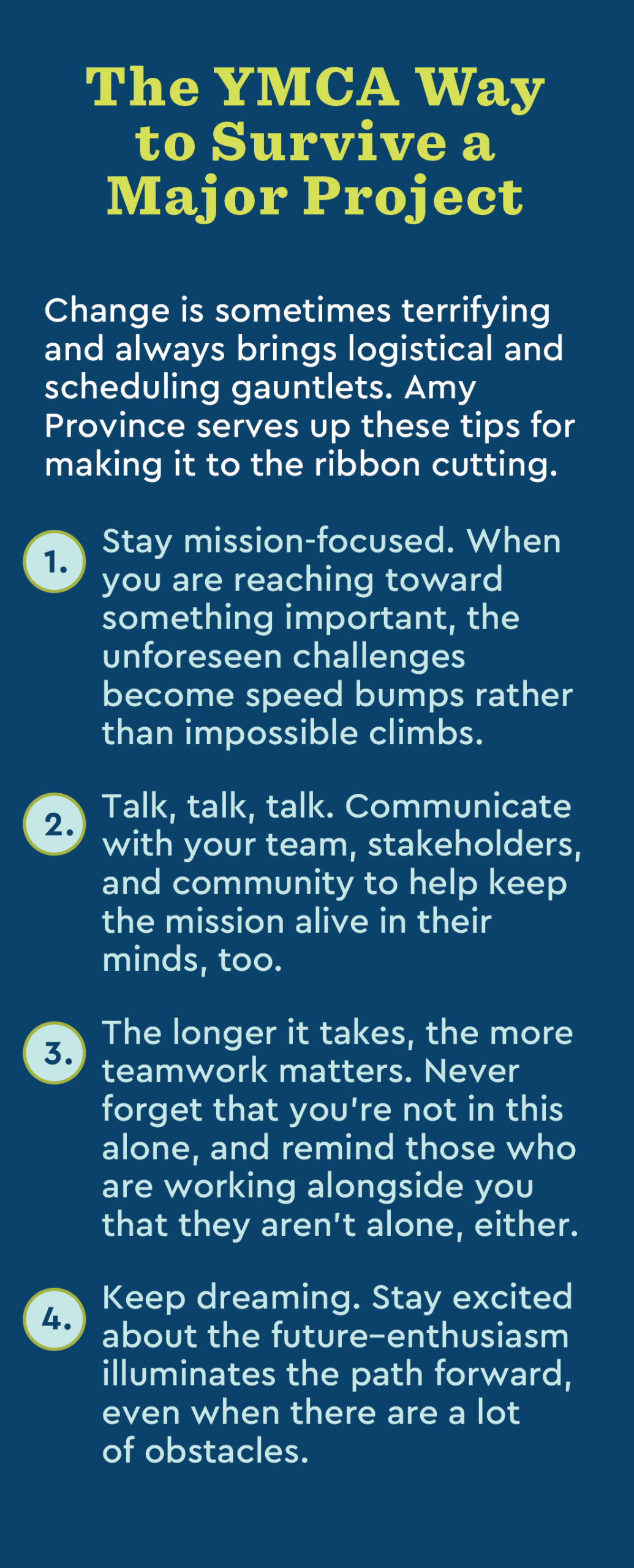
Following the build-out of the new Y on Foster, Elliott envisions strengthening the brick, mortar, and glass facilities by reaching out to other nonprofits–think schools, civic groups, and youth organizations–that share the Y’s mission.
“There are a lot of nonprofits doing good but repetitive work,” he says. “I always use the term mowing the same lawn. There is a lot more opportunity for collaboration and partnerships to make the community stronger.”
JUST KEEP SWIMMING
The YMCA owns more water globally than any other organization.
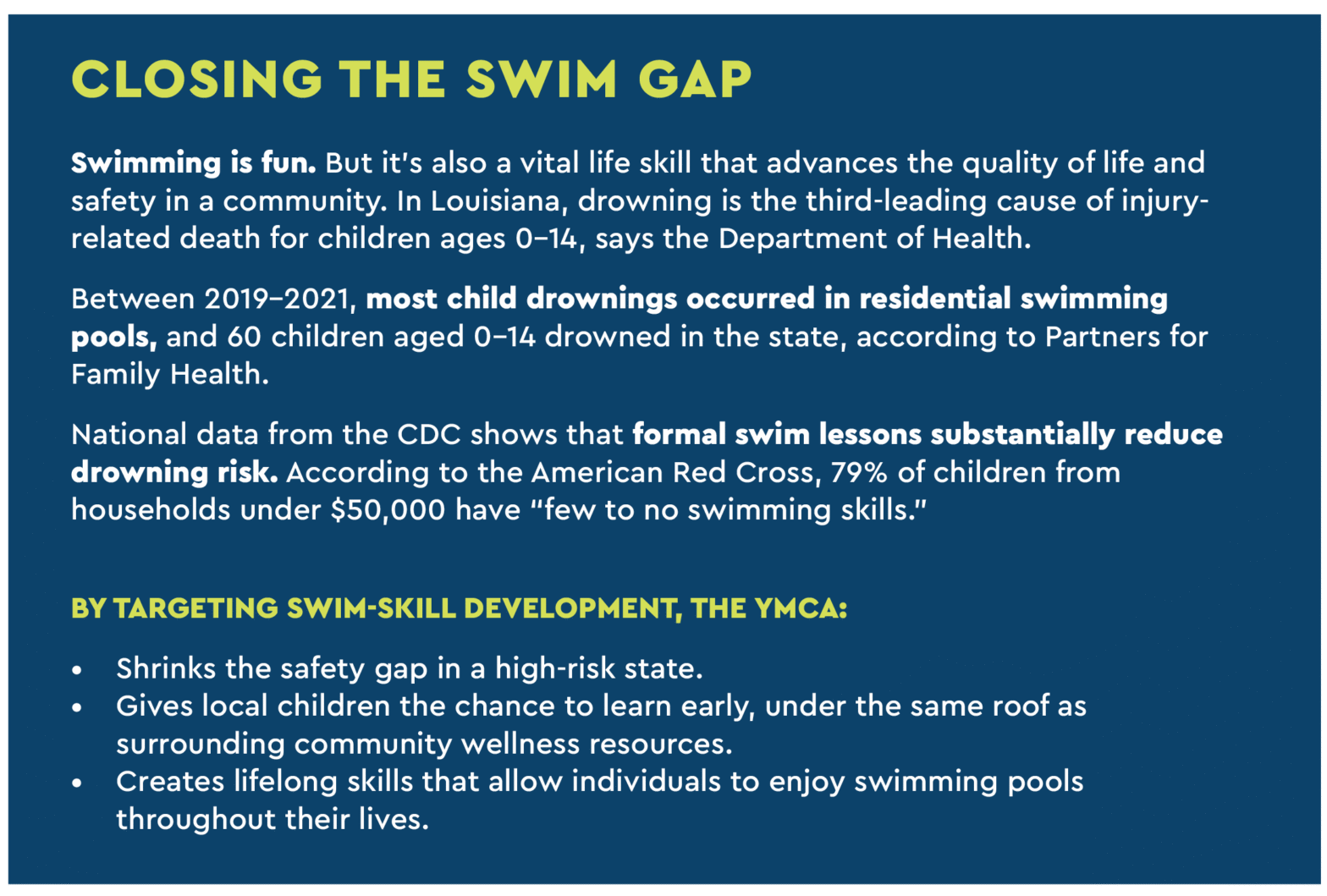
“One of the things we are very passionate about is teaching every kid how to swim,” Elliott says. “Last year we taught 3, 900 kids to swim for free, and we have a more audacious goal moving forward that we want to teach every second grader in the school districts we serve at least safety around water.”