This novel idea is transforming Howell Park one hoop, note, and partnership at a time.
By Amy Alexander | Photos by Darlene Aguillard
There’s something magical about a new basketball court. At the Inspiration Center, the paint is ready and gleaming.
The nets wait for the first of a million slam dunks and swishes. The kids will come, with high fives, dropped dimes, squeaking shoes, and a little bit of good-hearted banter.
From nearly any point inside the Inspiration Center, you can see through to another program area. Included in those is a glassed-in law enforcement office, where transparency is the message.
That was the goal from the start.
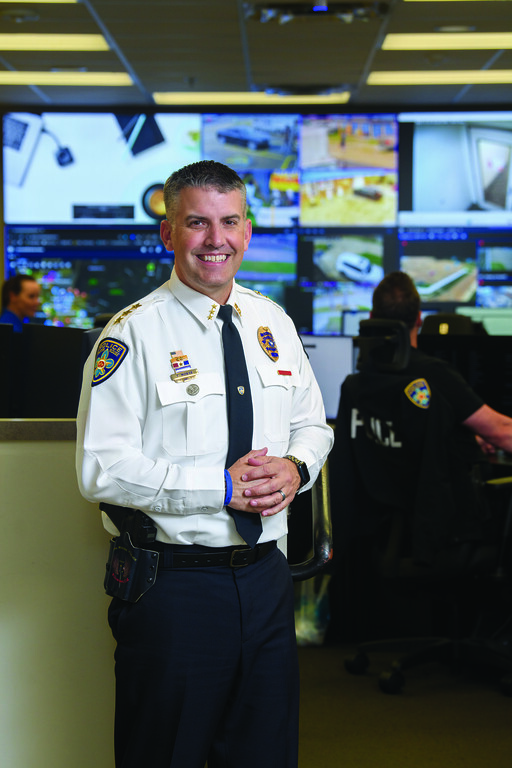
Police Chief T.J. Morse says the project grew out of a conviction that public safety is a shared responsibility. “We can’t arrest our way out of crime,” he says. “We need everybody to come to the table.”
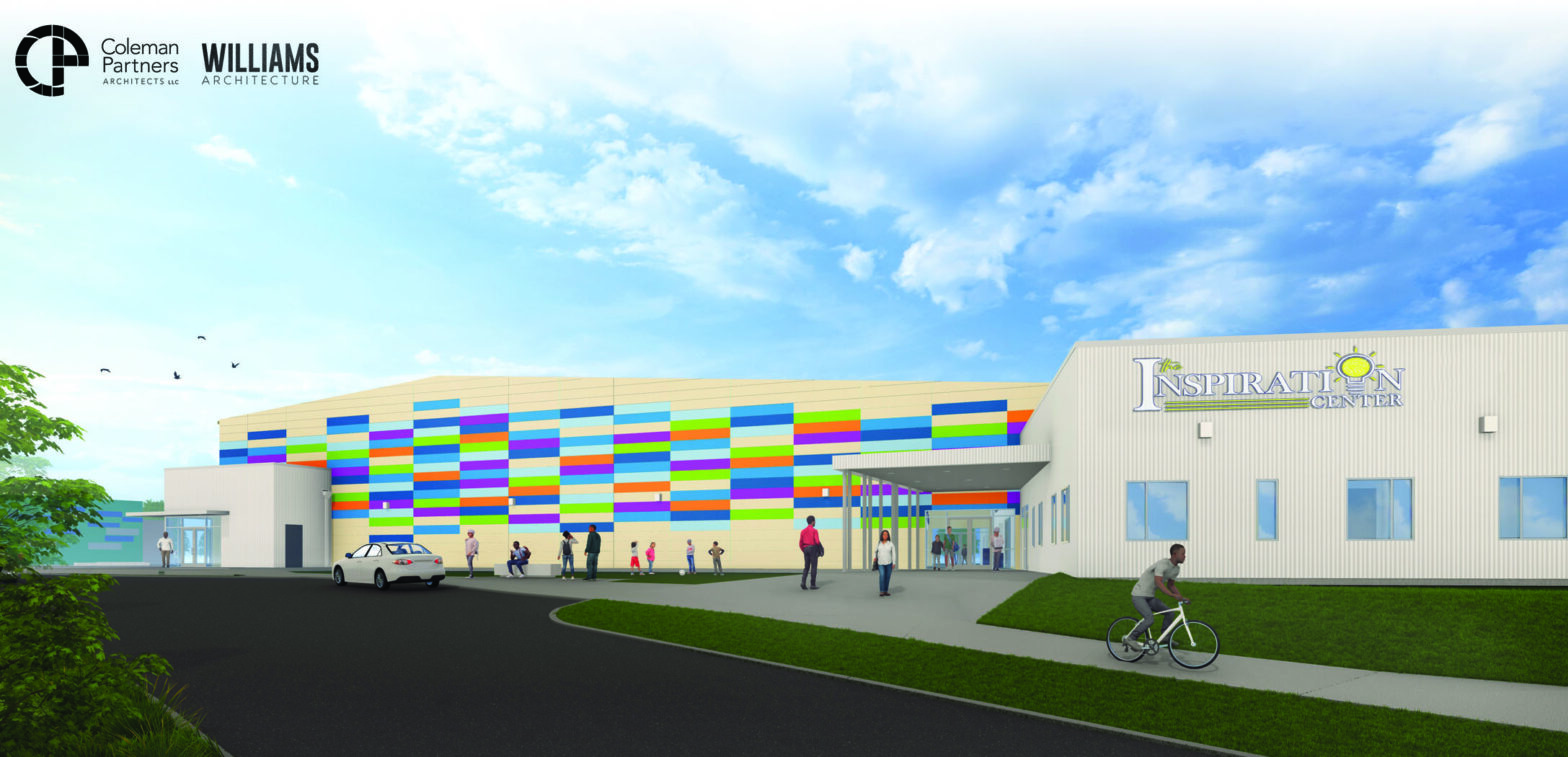
The 25,000-square-foot facility brings athletics, arts, mentorship, and technology together under one roof. Operated by the Boys & Girls Club of Metro Louisiana, it will feature tutoring rooms, a recording studio, an EA Sports gaming suite, and a full-sized basketball court.
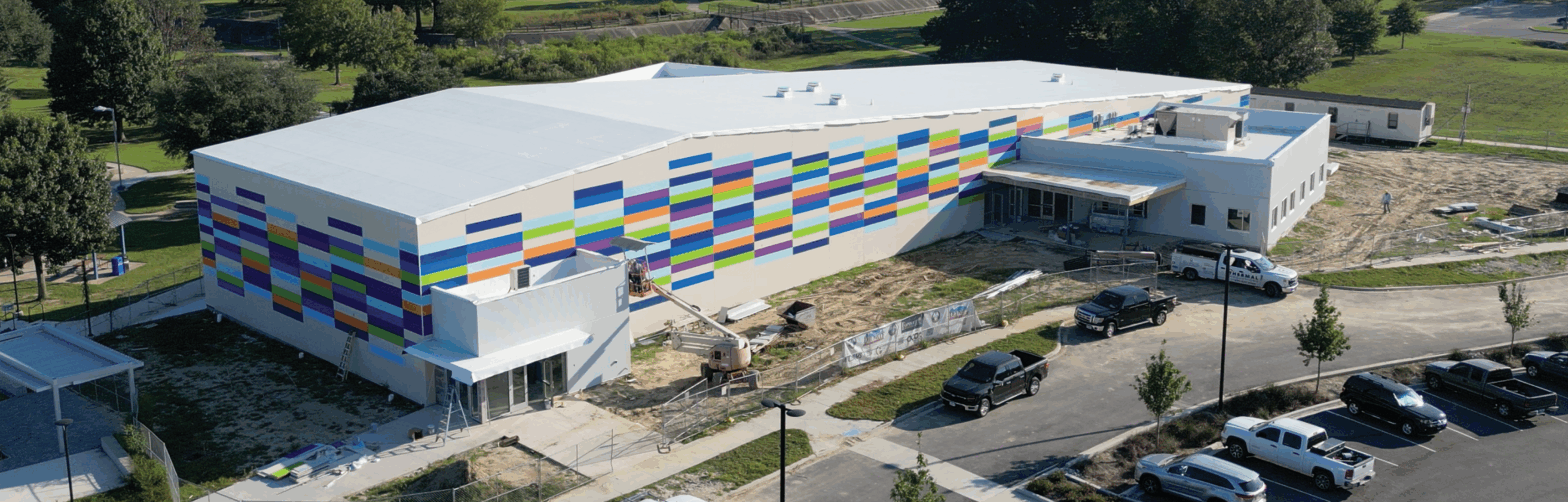
Pictured right: Clay Young visits the Inspiration Center as construction wraps up on the basketball court.
“This center serves the entire family by filling gaps related to job readiness, mentorship, education, nutrition and overall health,” says Clay Young, Chair of the Louisiana Law Enforcement & Criminal Justice Foundation.
What started as a wish rapidly gained mission momentum in Young’s mind. He dreamed of inspiring kids in North Baton Rouge.
He shared the concept with Angel Nelson, CEO of Boys & Girls Clubs of Metro Louisiana. They clicked. Nelson had long been brainstorming a center where kids could play and imagine their lives, then connect with mentors who could help them achieve their goals.
“He had the idea, and I had the blueprints,” she recalls. The partners were able to secure a $5 million state appropriation from then-Governor John Bel Edwards, plus funds from the city of Baton Rouge and additional support through federal New Markets Tax Credits.
The project sits in the 70805 ZIP code, an area short on grocery stores, restaurants, and youth resources. To Nelson, that makes the center transformative.
“A lot of kids don’t have anywhere to go,” she says. “This is huge.”
The Center includes a washer and dryer for families who need them, showers, separate wings for younger children and teens, and spaces for mentoring and tutoring.
Access requires commitment, however. Morse explains that families will apply and take part in meetings or classes before using the amenities. “It’s not just walking in off the street to play basketball,” he says.
“We’ll never turn a child away,” Nelson adds. “But we do want families to have buy-in. When parents participate, kids see that they are valued.”
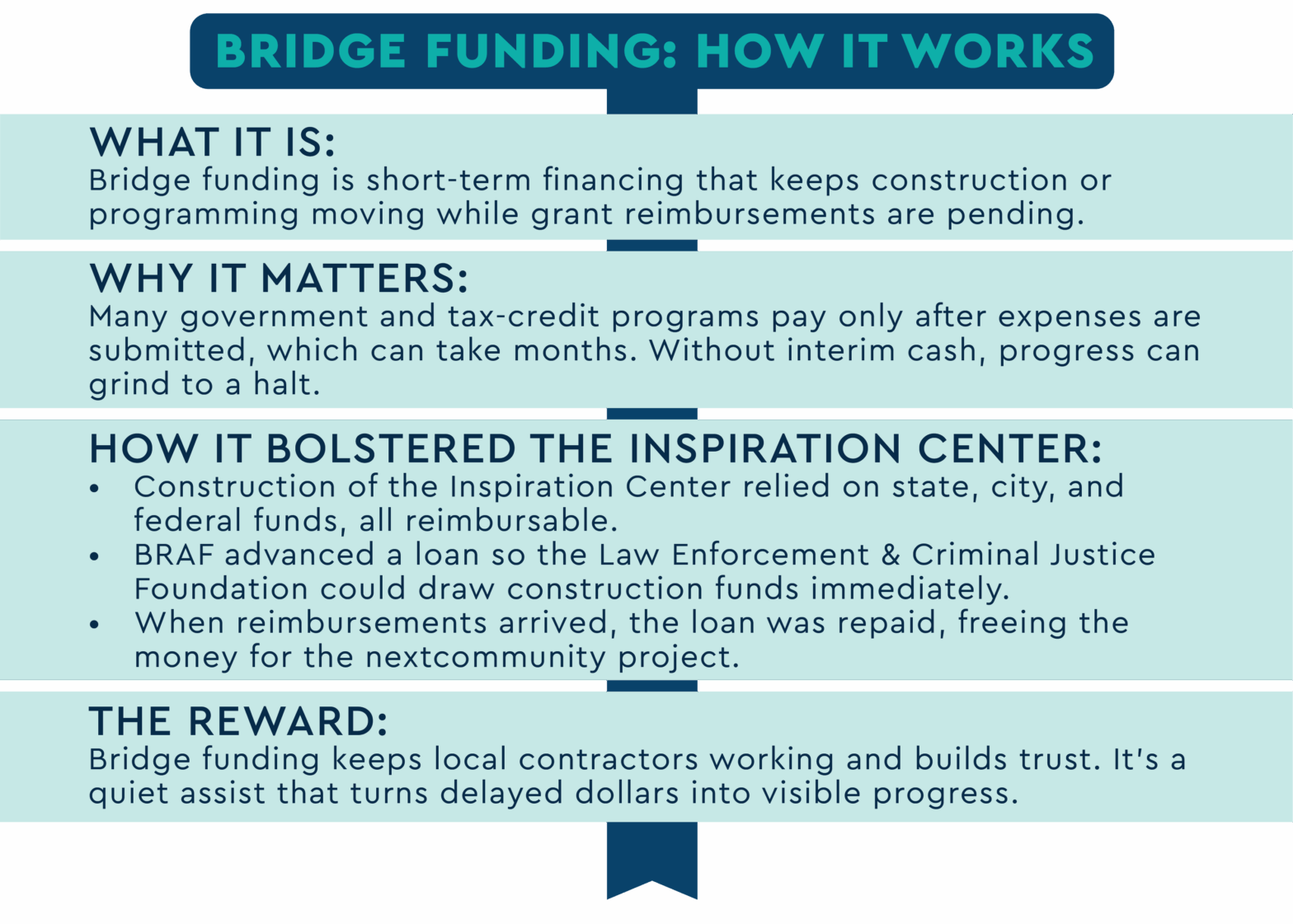
Because multiple grants are paid out on a reimbursement basis, construction faced potential delays. The Baton Rouge Area Foundation solved that problem with a short-term bridge loan.
Chris Meyer, BRAF’s president and CEO, notes that this type of financing has become a tool for keeping civic projects on track. He says bridge funds allow organizations to draw down construction money while waiting for public dollars to be reimbursed. It’s a practical example of how the Foundation is blending philanthropy and impact investment.
Young compared the process to a team sport. In essence, BRAF provided the assist that kept the game alive.
Edmund Giering, BRAF’s general counsel, says BRAF’s approach begins with collaboration.
“We start with yes,” he says. His goal is to keep the legal process simple enough, even when it gets complex, so that partners can stay engaged and confident.
From its clean windows to the transparent central office, the Inspiration Center’s design makes visibility a live presence. The law-enforcement area sits in the middle of the plan, ringed with glass, so officers and youth can see one another throughout the day.
During early architectural brainstorming sessions, the conversation centered on service. Architecture can’t fix inequity, but it can remove barriers between people with open corridors, natural light, and durable, welcoming materials that make the building feel like a commons rather than an institution.
The Center’s programming, led by the Boys & Girls Clubs, extends beyond recreation. Nelson lists a range of evidence-based programs, everything from character and leadership development, homework help, STEM building, bullying prevention, and conflict-resolution training, alongside creative outlets such as recording, painting, and gaming.

She calls the high-tech amenities “carrots we can dangle.” The real goal, she says, is to draw kids into mentorship and learning. Officers assigned to the space will work side by side with youth, not as enforcers but as guides.
They can see the kids and the kids can see them, she says. That visibility builds trust. Morse agrees. He wants his officers to spend time with neighbors when no one is in crisis “so they can see each other as human beings and not just the uniforms.”
Basketball and music anchor the Center’s cultural heart. Morse emphasized that the full-size basketball gym would be a major draw for local youth — the only indoor court available in the area. It’s the reason young people show up.
Once inside, they discover other opportunities.
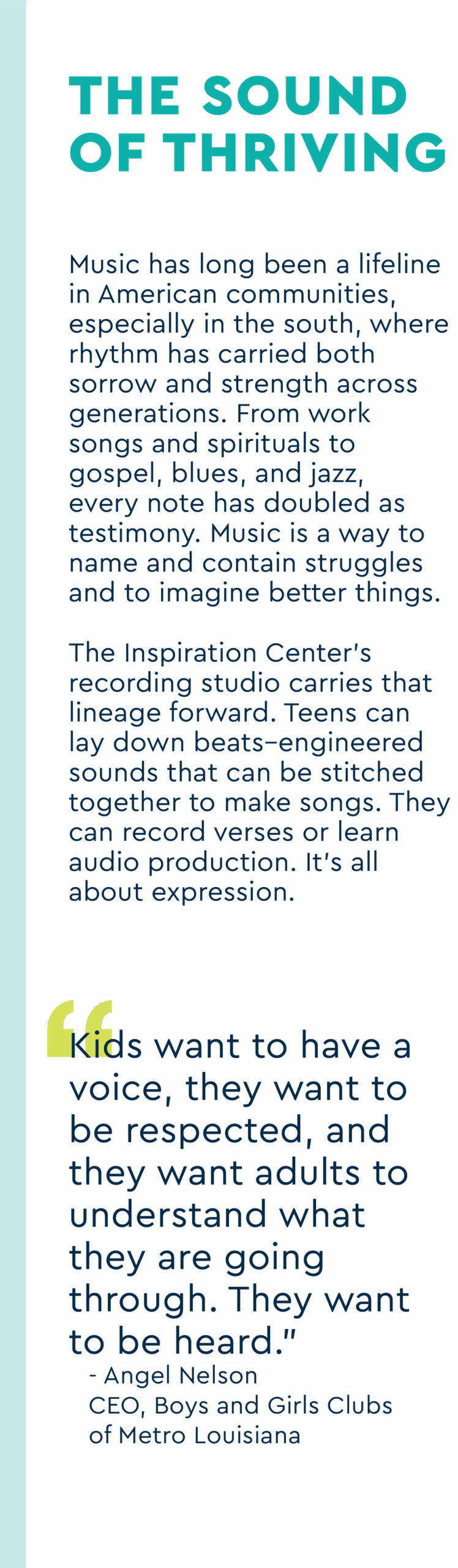
Music offers a different kind of growth. The new recording will let teens record songs, experiment with beats, and learn production skills. Nelson says it gives youth a voice–and a reason to show up.
Chief Morse remembers the neighborhood from his earliest patrol days. As a rookie officer, he often saw the same eight- or nine-year-old boy waving from his porch. Over the years, they stayed in touch. Today, that boy leads a local nonprofit.
For Morse, that story proves how small relationships can resonate across decades.
“That’s the heart of this,” he says.
Young believes the center will multiply stories like Morse’s. It’s all about getting to know the people who live and play on the blocks near the Center.

“Community input was invaluable during this process,” Young says. “We wanted to be sure we were offering something the community could really use.”
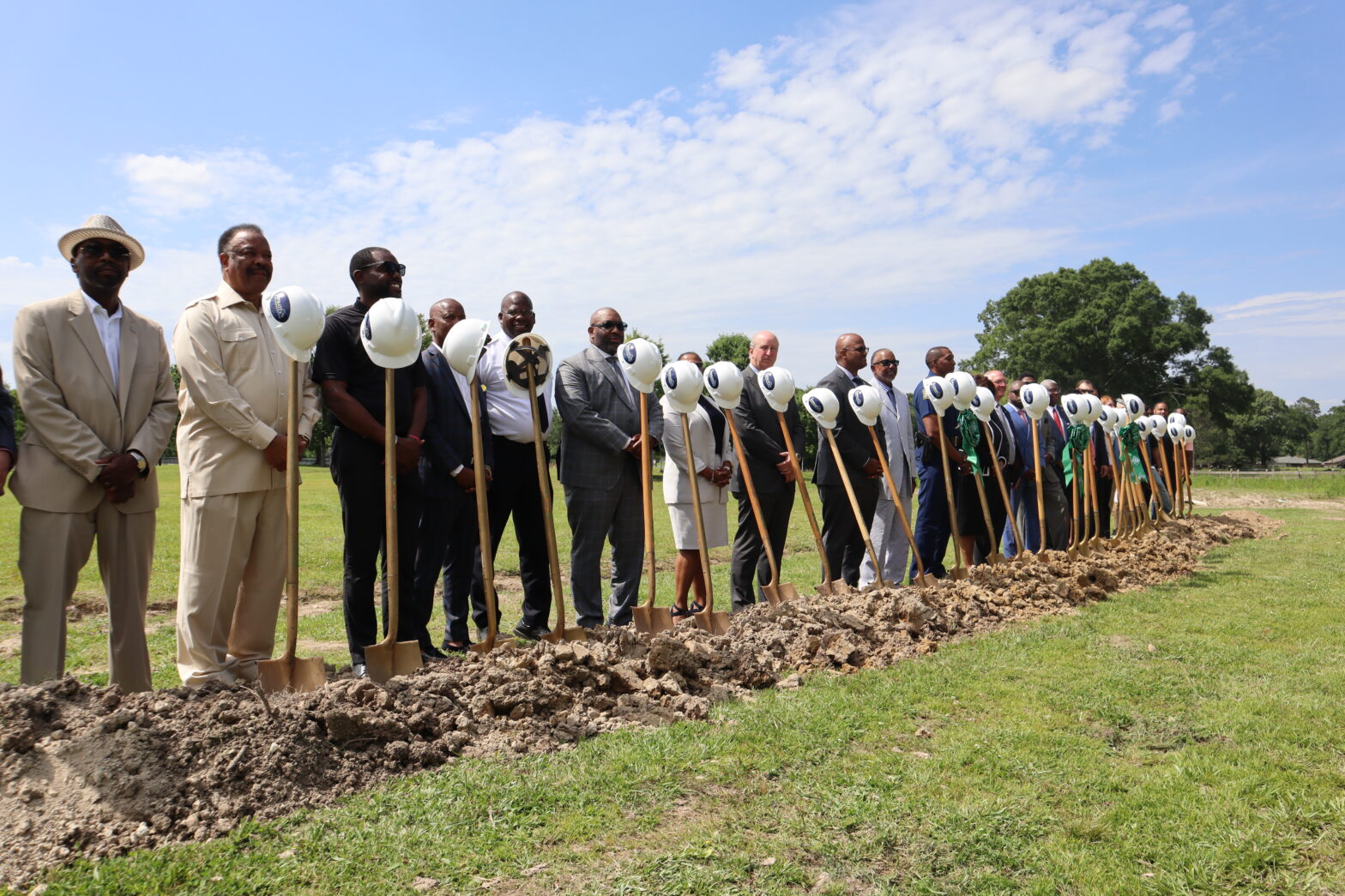
Nelson, Young, and other stakeholders spent nearly two years conducting community walks and neighborhood meetings before construction began.
“We listened first,” Nelson says. Residents talked about jobs, food access and the need for mentors. “This building is a response to what they told us.”
Meyer called that outreach essential, reflecting BRAF’s data-driven approach to investing with input from the impacted community.
“This is an all-hands-on-deck kind of situation,” Young says. “We all care about our community, and we want to see it be as good as it can be.”
As completion nears, Morse envisions using the space for police graduations and community events. Nelson imagines a place alive from morning tutoring to evening open gym. Meyer sees a model that could be replicated across the region.
Young hopes the impact will compound, so that years from now, alumni of the Center return as mentors themselves. He calls the building a promise.
“Five or ten years from now, I hope we will have impacted crime, quality of life and the overall improvement of the area around the building,” he says. “This project is a testament to collaboration.”